Design solves business problems, not aesthetic ones.
It’s how we choose our clients, and how they choose us.


Taipei / Tokyo
Go-to-market judgment × Code we write ourselves × Content planned in one pass
EST. 2026


Premise
Design solves business problems, not aesthetic ones.
It’s how we choose our clients, and how they choose us.
We look at the gap between your business goals and where you are now, then decide whether design needs to change, and which part. Once, our conclusion was to leave the website alone and just make the pricing clear.
We learned this order during our years at Google and YouTube. Every product launch opened with the same questions: who are we selling to, what problem are we solving, and what does success look like. Design came in much later.
And it all has to connect. Farm out brand, design, tech, and content to different people and you end up with four things that fight each other, and you’re the one who pays to make them fit.
We write the tech ourselves: websites, apps, payments, integrations, automation. So we never water down a design because it’s “hard to build,” and we never force a build just because “that’s what the mockup shows.”
That list is what we do. We don’t sell it item by item. We group it into three tracks based on where your customers meet you, and plan each track all at once.
Why all at once? Because touchpoints affect each other. Change your positioning and the first line of your website has to change. Swap your key visual and every social graphic has to be redone. Fix things one at a time and you never stop fixing.
See which of these sounds most like you right now. “We can’t clearly say who we are” is the first track. “We can say it, but our website doesn’t hold people” is the second. “Both are fine, but nobody knows we exist” is the third.
Sound like all three? Then start with the Anchor Sprint. Two weeks later you’ll know which track to take, and that answer holds whether or not we’re the ones who carry it out.
01
Plan them together, and they look like one company.
People run into you in more than one place: your website, business cards, decks, packaging, social media, signage. Handle them separately and you get six shades of blue and four fonts. Every inconsistency dilutes how people remember you.
What you get A positioning statement, a logo with usage rules, a color and typography system, and a full set of templates from business cards to social posts. It all comes from the same set of decisions, so it holds together no matter who picks it up.
When it fits You’re raising money or pitching distributors, your visuals were all made separately, or you have a name but no face yet.
02
Plan it together, and the whole path works.
From the click that brings them in to the moment they hit submit, every step is a touchpoint. Split design, front end, payments, forms, and notifications across vendors, and the seams are where you lose customers.
What you get Pages you can edit yourself in the backend, a built component library, payments and forms already wired up, tracking that actually measures, and a handoff meeting where you run it yourself.
When it fits Your current site doesn’t make clear what you sell, every word change means calling a contractor, or traffic comes in but hardly anyone gets in touch.
03
Plan them together, and each one picks up where the last left off.
The first time someone hears about you, the third time they think of you, and the time they finally decide to ask: those take three different kinds of content. A single post or video can look great on its own, but nobody remembers you because of it.
What you get A messaging framework and final copy, a method for choosing video and social topics, a content calendar you can keep filling yourself, and two or three metrics you can actually read.
When it fits Your product is good but you can’t put it into words, you post a lot but it doesn’t add up, or you want to start on video but don’t know what to make first.

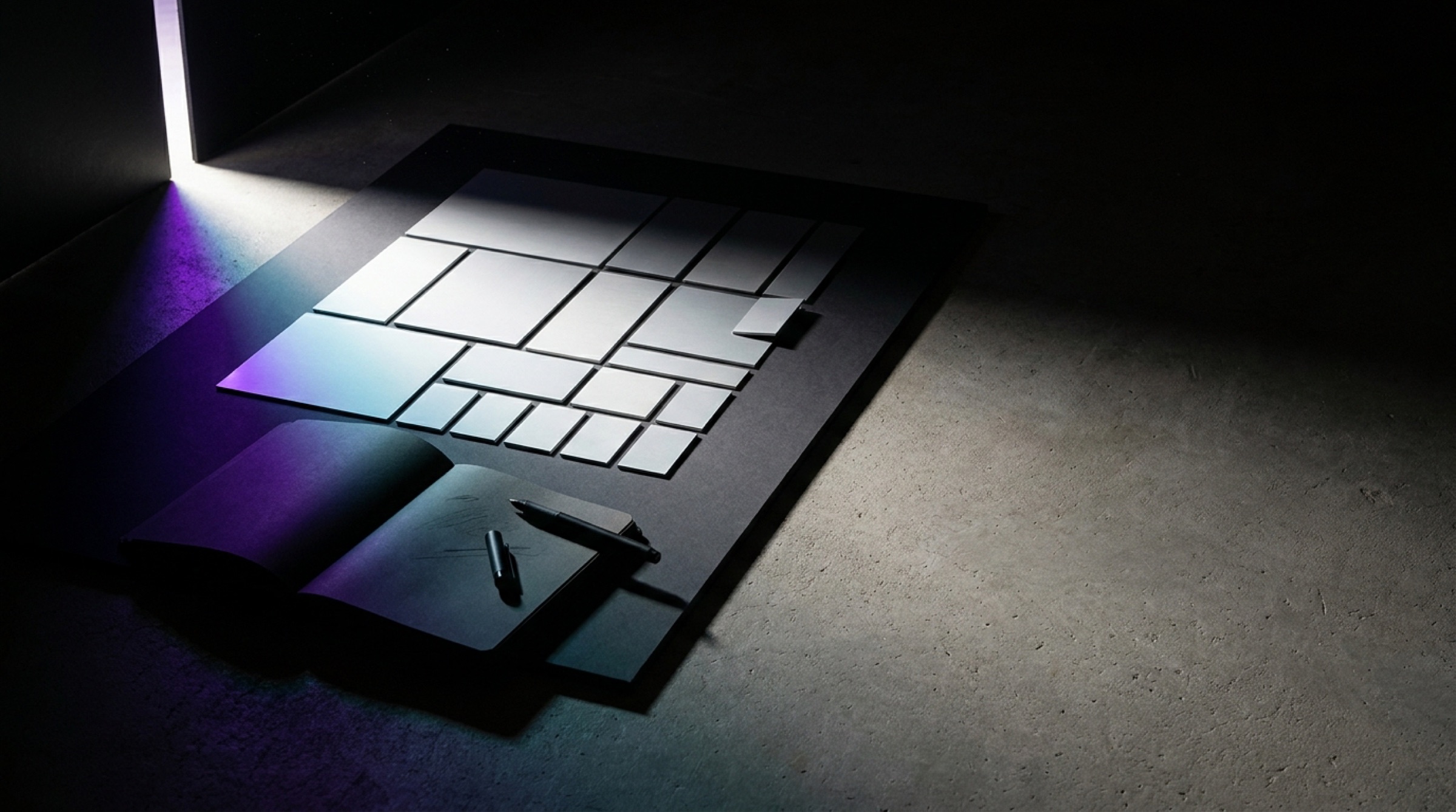
Most people come to us wanting a new website and leave with a more precise question. The intro call is 30 minutes and free.
Anchor, divergence, convergence, systems, handoff. Each phase ends with something you can take away, so you’re not waiting until the end to see results for the first time.
Your team can make changes on its own, and mistakes get caught. That’s the difference between a design system and a PDF.


What our clients say
What they said after working with us
01
“A client quote goes here, specific enough to check. Something like: ‘Within three months, inquiries went from two a week to two a day.'”
Client name
Title · Industry
02
“Second quote. The bar is ‘has numbers,’ not ‘sounds nice.’ A testimonial without numbers does nothing for the reader.”
Client name
Title · Industry
03
“Third quote. Ideally one about something that went wrong during the project and how it got fixed. Testimonials that are all praise aren’t believable.”
Client name
Title · Industry
What we’ve made, and what we were thinking at the time
Founder · Taipei · Tokyo
The difference isn’t quality. It’s how deep we go. If you’re not sure, start with the shortest. After two weeks you’ll know whether to go further, and that answer holds whether or not we’re the ones who carry it out.
Start here if you’re not sure what you need yet. In two weeks we map where you are and where you want to be. The conclusion might be “leave the website alone for now.” That’s an answer worth paying for, too.
What’s included
Starts after the Anchor phase. Pick one track (identity, web, or content) or combine them. We take the details far enough to hold up under close inspection, and hand it off with rules your team can work with.
What’s included
For after the system is in place: upkeep and iteration. A strategy meeting every month keeps the work growing and the rules in check. Handoff day isn’t the end.
What’s included
Yes, and that’s how most people start. The intro call is 30 minutes and free. We’ll ask a few questions about your business, not your website. Most people come to us wanting a new website and leave with a more precise question.
There’s no standard answer, but there’s a test you can run yourself: once this is done right, how much more will you make in a year? Multiply the extra qualified inquiries by your average deal size, and that’s the difference over a year. How much is worth spending follows from that. If you can’t point to anything it would add, the problem isn’t the website, and you should hold on to that money for now.
We’ll work through this with you on the intro call. It’s common for the answer to be “not yet.” On our side, we only quote once the scope is clear, and we quote the whole thing at once. No low number up front that creeps up later. At the end of the Anchor phase you’ll have the full scope and price, and you decide then whether to go ahead.
We do both, and we keep them together on purpose. Split design and build between different people and you get a design that can’t be built plus a website that doesn’t look like the design, and you’re the one who pays to make them fit.
Here’s a question to ask any studio: “Who is going to turn this design into a website?” If the answer is vague, that cost usually lands on you.
Yes. That’s part of our handoff standard, not an extra service. You don’t get a PDF. You get a set of written rules you can check one by one, plus a handoff meeting where your team does the work hands-on. When something gets changed the wrong way, the rules catch it.
The test is simple: in the handoff meeting, you make the changes. We don’t demo while you watch. If you can’t make them, we haven’t finished handing off.
Yes, and we’ll probably talk you out of doing all of it. Usually only one part is actually stuck. Sometimes the identity doesn’t say clearly who you are. Sometimes the identity is fine but the website doesn’t hold people. Sometimes both are fine and nobody knows you exist.
Finding out which one is exactly what the two-week Anchor Sprint is for. We also pick up work other people started, as long as it’s worth keeping. We’ll tell you whether it is on the intro call.